יום שבת, 17 בינואר 2015

Guidelines For The First Puppy Training School Class Pets Articles

Enrolling your puppy for Puppy Classes at a Dog Training School will give your puppy a great start and here are a few tips to help the first class go smoothly for both you and your puppy.
You have made a good decision to take your puppy to Puppy Training School and here are some tips on how to prepare for the first class. Dress in casual comfortable clothes as you will be totally involved in the training of your puppy and it is not unusual to have to sit on the floor with your puppy. Also wear shoes with low heels and soft soles.
You probably will also need a pocket or waist bag for tit-bits and it is a good idea to wear trousers if possible as skirts tend to flap in a dog's face.
These tips will help you prepare your puppy too. To ensure that your puppy is comfortable wearing a collar start placing one on it long before the first day at school.
You don't want an over excited puppy arriving at school on its first day, so if you need to take the puppy by car to the venue ensure that the puppy is used to travelling in the car.
It is advisable to take the puppy for short rides in the car a few days prior to starting school so that it gets used to it.
It is not a good idea to feed your puppy just before leaving for class. Rather feed your puppy at least an hour before training so that it has time to do its business before you leave for class. You don't want the distraction of cleaning up accidents in the class!
By arriving at the Puppy School in good time will help your puppy as it will then have time to get acquainted with the area, have another run around outside and greet the other puppies attending the class.
You will I am sure find that there are a variety of dogs attending the same puppy class, but this will not be a problem if your puppy is already used to socializing with other dogs.
Be prepared to give the puppy a lot of reassurance and love as it may be a little nervous if your puppy is not used to other dogs. I recommend choosing a spot next to another puppy of similar size to your own.
Be committed to attending all the classes if you have enrolled your puppy at Puppy School for a full course. However, if your puppy is not wellComputer Technology Articles, it is still worth your while to attend the class without your puppy and then once it is feeling better you can catch up with the training at home.
Be sure to give your puppy lots of praise during and at the end of each class and remember to do your homework before the next lesson and practice what you both have learnt in the training when you get home.
As consistency in training a puppy is very important share the commands and training techniques that you learnt at the puppy school with the other members of your family so that you all use the same commands and avoid confusing the puppy.
Source: Free Articles from ArticlesFactory.com


ABOUT THE AUTHOR


The Puppy Dog Training Tips website is filled with tips for training a puppy. Subscribe free to the Puppy Dog Training Tips Newsletter and receive free dog and puppy training tips and more.

יום שלישי, 13 בינואר 2015

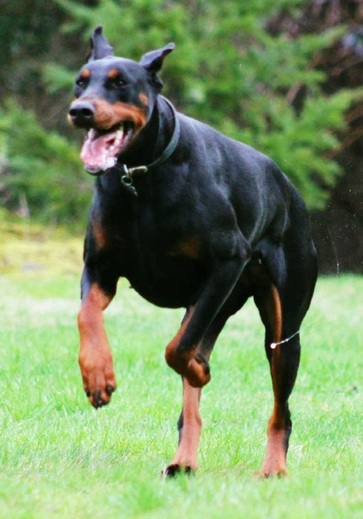
Caring For Your Doberman Puppy By Joseph M Sabol

It seems like you have been waiting forever, but its finally time for your new Doberman puppy to come home. Every puppy needs to be taught and trained on how to adapt to his new family, and the family has to adapt to having a new puppy in the house. The new puppy may be a little scared and sad to be away from his litter mates, or he may be excited and curious to explore his new home. Either way, there are some basics in caring for your new Doberman puppy.
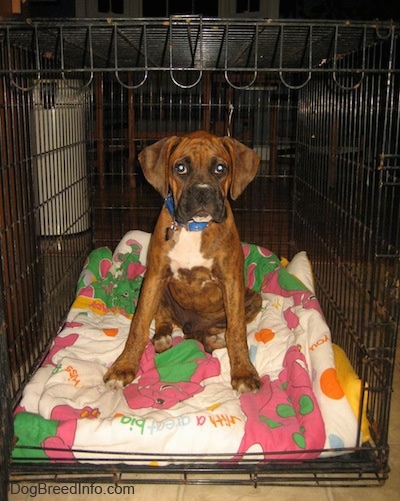
It is important to have a crate for your puppy. Put a blanket or towel in the crate and introduce your Dobie to the crate as soon as possible. Leave the door open so he feels like he can go into his "den" whenever he wants. You can also put a toy in the crate. If your puppy gets tired, or overwhelmed, he will likely appreciate his own special place to rest. The first few nights at home can be difficult for the puppy and the family. You can expect the pup to cry and whine most of the night. Something we found helpful was to put a large stuffed animal in the crate. We found a stuffed dog that was bigger than our puppy, and she immediately cuddled up to the toy like she would with her litter mates. After a few nights your puppy will get used to sleeping in his crate. If you can place the crate in an area of your home where it will not be isolated, this is best, especially at night.
The best food for your puppy is a premium quality dry kibble, formulated especially for large breed puppies. This special formula insures the proper amount of protein and other nutrients while preventing the puppy from growing too big, too fast. Rapid growth does not allow the bones and joints time to develop properly, which will cause problems as the puppy matures. We also give our Dobermans a human grade, all natural pet vitamin. This provides supplements not in the dog food and not naturally produced by your dog. Omega fatty acids and antioxidants are beneficial for your dogs healthy immune system.
Dobermans at any age do not like to be alone and away from their family. Your Doberman puppy will need lots of attention, but this is a good thing...who doesn't want to play with their puppy as much as possible? Socialization is especially important for a Doberman puppy. Any family members, neighbors, friends of your kids and neighborhood pets that will be around your new Dobie should be introduced early on. This way your naturally protective new family member will know there is no threat or danger to "his" family.
Puppy kindergarten is a good idea for your new Doberman puppy. This provides several important benefits. It will get your pup used to traveling in the car and being out in public. It will be an excellent, positive opportunity for socialization, and it will give your busy, active puppy someplace to focus his energy. Dobermans are very intelligent and highly trainable. They are happier if they are challenged physically and mentally. Basic obedience classes will help your puppy learn manners and will make him much easier for you to control. Believe me, a Doberman will try to be the boss if given the chance!
Dobermans are a working breed and they like to have something to do. This is a breed that requires a lot of attention, even beyond the puppy stage. They are great companions and family dogs. If you take the time to work with your puppy, he will grow up to be a cherished member of your family.
Joseph M. Sabol is a world class Doberman breeder. Please go to http://petvitamins4u.com or to http://theroadhousedobes.com for further information.
Article Source: http://EzineArticles.com/?expert=Joseph_M_Sabol

Article Source: http://EzineArticles.com/1629170

I Just Got a Doberman Puppy! Now What? By Joseph M Sabol

Your Doberman puppy should be no younger than 8 weeks when you bring him home. Being separated from his mother and litter mates for the first time will be a big adjustment. So, how do you make his transition to your home as smooth as possible? One thing you might want to do is take a blanket or towel to the breeder and rub the other puppies and the mother with it to get their scent on it.
When you first get home with your Doberman puppy, the first thing you should do is make him an appointment with the vet, if you have not already done so. The next thing is take him outside to the yard where you will want him to do his business. Let the puppy explore and become familiar with "his" territory. If he happens to do his business while he is playing in the yard, praise him. After he has been outside for a short time, bring him in and let him explore the house. Keep areas blocked off that you do not want the pup to go. Doberman puppies are by nature bold and curious. They are not usually timid and fearful, but if your pup is a little scared or nervous, he will get over it quickly.
Introduce your puppy to his food and water dish. You should have food available all day for a young pup because they grow so fast. It is best to feed a premium dog food especially formulated for large breed puppies. This will guarantee the growth and development rate will be appropriate. This is also a good time to show the puppy his crate. Place the blanket with the scent of the mother and puppies in the crate. Put him in there with a toy and leave the door open. The crate will be the pups home when you are away. It will also be his own "den" where he can go for a time out. It is important not to send the puppy to his crate as punishment. It should be a place he likes to go.
The first few nights at home will be less than peaceful, unless you intend to let your Doberman sleep in bed with you. This may seem like a good idea in the beginning, to keep him from barking all night, but a full grown Doberman does not leave much room in the bed for you! There are a few tricks you can use to help your puppy learn to get though his first nights away from the rest of the litter. The blanket with the scent from his litter mates is important. Another trick is to keep a nightlight on and the TV or radio playing softly. I had good luck with a large stuffed dog in the crate for my youngest Doberman. She cur
led up to it and went to sleep. I cannot promise this will work for you... count on several nights of barking and whining. It really does not take that long for the puppy to adjust.
Since puppies are so playful and active, they tire easily and nap frequently during the day. Make sure you give him plenty of exercise before bedtime.
One of the most important things you will need to do with your Doberman puppy is socialization. After he has had some time to meet the family and get familiar with his new home, you will want to introduce him to other people he will encounter on a regular basis. He should be introduced to your childrens friends as well as your neighbors. You may even want him to get to know your letter carrier if the pup will see him every day. Do not forget to introduce your puppy to the neighbors pets. Dobermans are not always friendly with other dogs and since they have a high prey drive, they are likely to want to chase smaller animals. Make sure you Doberman puppy gets to know nearby dogs and cats while he is still young.
Doberman puppies are a lot of fun, and will be a wonderful addition to your household. Your Doberman will grow up to be an extremely loyal, loving and affectionate family member.
Joseph M. Sabol is a world class Doberman breeder. Please go to http://petvitamins4u.com or to http://theroadhousedobes.com for further information
Article Source: http://EzineArticles.com/?expert=Joseph_M_Sabol

Article Source: http://EzineArticles.com/1372781

יום ראשון, 11 בינואר 2015

Puppy Crate Training - The Fundamentals by Alex Page

Every trustworthy puppy owner desires what's best for his or her pet. Individuals have puppies as pets because they desire companionship, they enjoy the company, they enjoy the fun and playful attitudes of the puppy, or maybe their puppy offers a sense of security for the family. For whatever reason you have a puppy, crate training him is an important way to keep your relationship with your dog as gratifying as possible.
There are numerous rewards to having a crate-trained puppy. Puppy crate training€¦
- aids in housebreaking your furry friend.
- provides him with his own private area which can be moved if needed.
- prevents destructive conduct.
- safeguards your puppy from potentially risky items in your household.
- offers a stable, easy method of transporting your puppy.
- is welcomed in many hotels. Some hotels will only let your puppy stay in the room if he is crated.
- gives you the comfortableness of knowing where your puppy is if you are having visitors at your house.
If your puppy has behavior problems, crating your puppy can keep those troubles unreachable from your puppy. If you are potty training a puppy or re-training an older dog, the crate is a worthwhile tool used to accomplish the task. Puppy's have a natural instinct to find a den or safe place for lying. The puppies find comfort and safety in their hideaway. If you've ever noticed how puppies like to curl up in confined places, under tables or chairs, next to furniture, against pillows, etc., then you've witnessed a puppy's natural tendency to find a den. When a puppy is born, the mother teaches her puppies not to soil their sleeping or eating area. The mother is constantly keeping the "den" clean for her and her puppies. Even when they are newborns, the
puppies know to go away from their sleeping and eating area into another spot. Call it instinct or call it a mother's guidance, but puppies learn not to pee or poop where they rest or eat.
When puppies are used to having their own safe place, they will return to it out of habit for comfort, rest, and security. When your puppy learns that there is never disorder in the crate, that all is quiet in the crate, and that the crate is his home, he will return to this safe-haven without hesitancy, either on command or on his own.
It's important that you realize this final point€¦ puppy crate training is supposed to create a good surrounding for your dog. Never discipline, shout, or mistreat your dog in any way while he is in his crate. Dogs invariably react better and more consistently to positive support. If you are serious about making your crate training positive for you, then you need to make an attempt to keep the crate training positive for your dog first.

About the Author

Alex Page has been a happy pet owner for nearly 30 years. He enjoys helping pets and pet owners have the best relationship possible. He is currently a key article contributor to 123-pet.com, a site dedicated to discussing all things about pets such as dog training techniques, correcting puppy crate training, and cat and dog products.

Easy Steps to Puppy Crate Training by Jude LeMoine

Puppy crate training is easy especially if you begin training your puppy the day you bring him home.
Buy a crate big enough to allow puppy to lie down, stand and turn around inside it, but not so big she will be inclined to use it as her toilet (Dogs do not like to toilet in a small living space.)
If your puppy will grow to be a big dog, find a crate with a moveable divider. Otherwise, you'll need several crates from puppy to adulthood.
Put a washable pad or folded old towels in the bottom of the crate.
Puppies are naturally curious. If there's a crate in his long-term confinement area with the door open and a few pieces of kibble inside, your puppy will investigate it. Bet on it!
Every time puppy investigates the inside of the crate even if only to put his head in, praise him and give him a treat.
If there's an especially tasty treat at the back of the crate and she goes inside to get it, do NOT close the door.
In the unlikely event that she ignores the crate entirely on day one, do nothing. Make a plan for day two to make the crate more interesting. Puppy training is a creative endeavour for you. Think like a puppy when you want to achieve something. For example: on day two, you and puppy are playing with a squeaky toy. Once she is really interested in the toy, toss it into the crate €" not too far inside the first time. Praise her when she retrieves it. The threshold of the crate has been crossed!
Toss the squeaky toy into the crate intermittently while you continue to play. Toss a treat or two in the crate in place of the toy just to keep it interesting.
After she's retrieved the toy or the treat from the crate 3 €" 5 times, end the session.
Play the same game several times throughout the day.
On day two of crate training puppy, put her breakfast just inside the crate. It doesn't have to be in a dish. A small mound of kibble will do nicely. Do NOT attempt to move her further into the crate or close the door. If she is reluctant to go in, play day one games again today and try putting dinner in the crate.
Patience and small steps will win the day!
If feeding breakfast in the crate went well, feed lunch the same way, perhaps placing the mound of kibble mid-way to the back of the crate. If puppy is undeterred by having to go a little farther into the crate, close the door halfway.
Repeat this crate training procedure at dinnertime.
On day three, feed puppy at the back of the crate, moving the door slowly towards the closed position.
If at any time during puppy crate training your puppy is uncomfortable, back up to the previously successful step.
Taking tiny steps in all the puppy training you do is more time consuming to be sure.
The payoffs are:
1) A confident puppy
2) A puppy who trusts you
Isn't that what training your puppy is all about?

About the Author

All the information you need to raise a well-mannered puppy can be found on my website:
http://www.judethepuppynanny.com/
See the article " Bozo's Safe Place" parts 1 and 2 for easy to follow crate training advice.

יום חמישי, 8 בינואר 2015

Puppy Training - Basic Learning Tips For the New Dog Parent By Sherry L Harris

Owning a puppy is one of the greatest joys people can have. In order to keep that joy going strong, you will want to train your puppy. This does not have to be difficult because just the basics of puppy training actually are necessary. You do not need your puppy to know any fancy tricks or anything like that to be a good dog. Really all you need is a house trained dog and a dog who listens to you. You actually will be able to do that on your own too, all you need to know are a few basic training methods.
One of the first puppy training methods you will want to implement is potty training. You can make this easier on both of you by bringing your puppy to the actual place you want him going. This will get him accustomed with it. In addition, you will want to watch for signs that he is ready to go. When you think you see them, you should take him out so he realizes he is supposed to go outside. You also want your puppy to learn to come to you. You can do this easily by making it the best thing to go to you. Give him lots of verbal and physical praise so they will be more likely to go to you again.
Another basic puppy training tip to use actually is a tip to avoid doing something. During the training, there will be times when your puppy does not do what you want. It might be tempting to verbally yell at him or even physically hit him. You should never do either one of these things because it only will put fear into your puppy. They will be afraid to do anything you tell them to because they think you will hit them. Sometimes knowing what to avoid is as good as knowing what to do.
You also will want to teach your puppy how to be on a leash. This is important because you will want to take your puppy for walks. This is an easy puppy training technique because it just takes practice. You do not even have to do anything special. All you have to do is get your puppy used to being on a leash and being walked. If your puppy is trying to pull the leash, just tell him no and pull him back.
Sherry Harris the author of a wide range of puppy topics including, but not limited to: puppy training, grooming, pet travel, pet food, and dog supplies. For hundreds more free puppy articles visit http://www.DogStyleNetwork.com. Hope you enjoyed the article topic on Puppy Training. Discover the best methods to quickly and easily train any puppy today!
Article Source: http://EzineArticles.com/?expert=Sherry_L_Harris

Article Source: http://EzineArticles.com/2675840

Giving Your Dog and Puppy Training Basics Makes For a Well Behaved Dog By Michael J. Brown

Most of us love our dogs and, unfortunately, most of them drive us crazy, but instead of trying to properly train them, we simply put up with their negative behavior because we don't have the time or extra money to put them through obedience dog training. The thing is that dog and puppy training doesn't have to be hard and it doesn't take hours and hours to get some solid basics of good dog behavior under your belt.
Now, there is no denying that when you're working to teach a dog to be well behaved, it can feel like quite a challenge. After all, when you're working with a puppy, you're dealing with a 'baby' that very quickly grows into an adult. This means that you have to work extra hard to give them the information they need to be the best dogs they can be.
The problem is that if you don't know how to properly train your dog, you could wind up with one that thinks you're his friend before his master and that could cause one big behavioral mess. While it's true that your dog will always be a work in progress, it doesn't mean that they can't be well trained.
Sometimes we need a little help to learn the basics of dog and puppy training and that's okay. This doesn't mean that you need to give your dog constant treats or that you can't reprimand her occasionally, but some of us need to learn the right balance in these training techniques to be able to have a truly well behaved dog.
For instance, do you have any idea how your dog thinks? Did you know that your dog really just wants to be a dog and can develop anxiety when you don't let it "just be a dog"? The right dog and puppy training will help you to learn these things and so much more.
Do you know how to properly train your puppy to go outside rather than make messes in the house? For some, this takes years to finally master, but it can be done in a shorter amount of time if you know the right way to teach them. For example you can use a crate to train your dog or puppy.
So, maybe you've decided that you do want to enlist the help of a dog professional to properly train your dog or puppy. This is good, it will give you the basics toward having a fabulous relationship with your pooch, but where do you find good training tips without having to pay a ton of money that you may not have?
You can now find quality dog and puppy training lessons online that you can start with right away and the price cannot be beat, compared to attending classes. Learn how to potty train your puppy, teach her good manners and walk politely on a leash, no matter where you are. Why sign up for a class that you have to wait to start and pay hundreds of dollars for when you can start training your best friend today and take your relationship with your dog from okay to fabulous in no time.
Michael Brown has always had an interest in dogs and their behavior. From an early age training dogs has been a passion. You can find more information about dog and puppy training online with professional dog training by visiting 'Dog Training and Dog Behavior' baddogproblems.com.
Article Source: http://EzineArticles.com/?expert=Michael_J._Brown

Article Source: http://EzineArticles.com/3224465